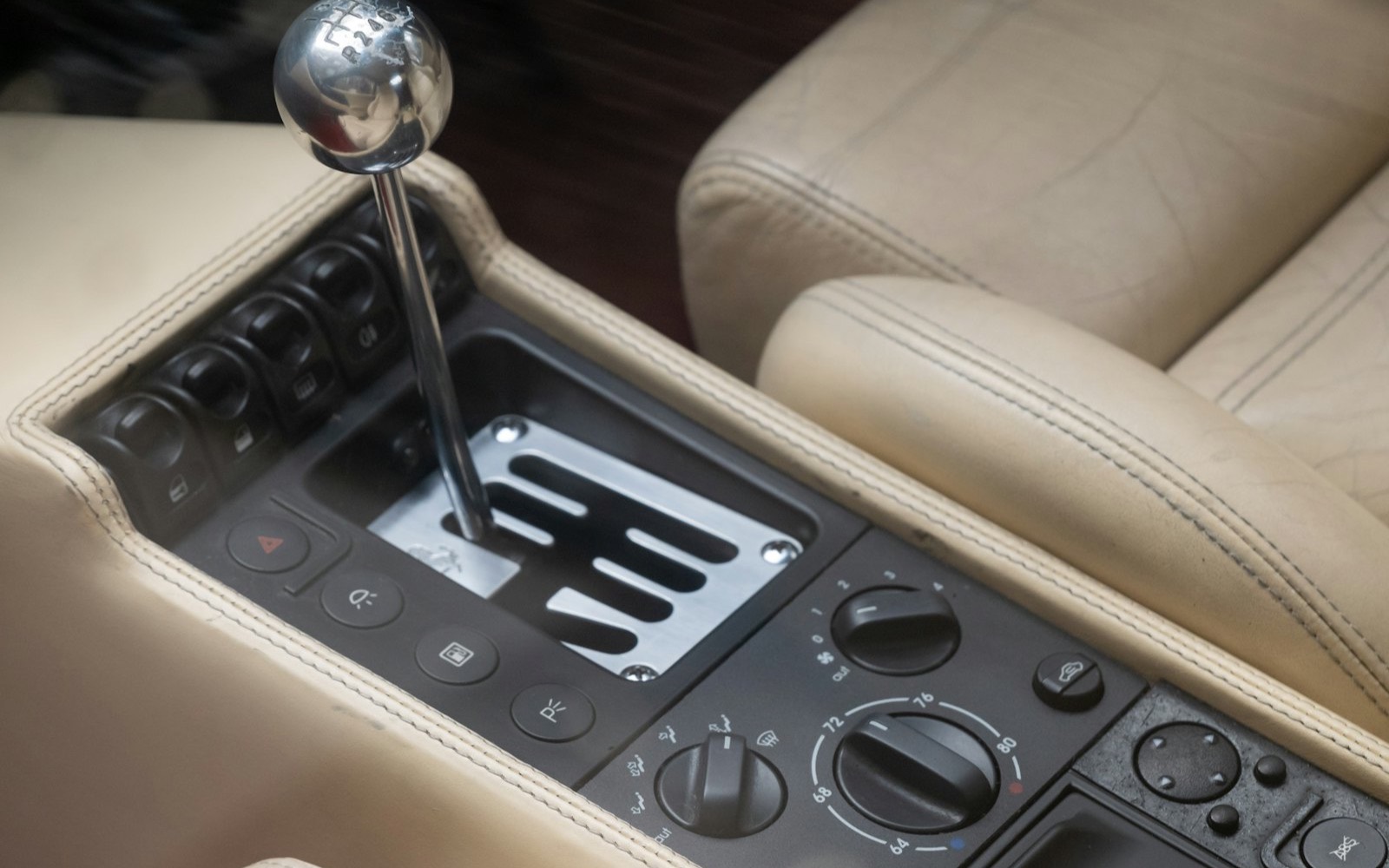
The first time I saw the Koenigsegg CC850 transmission, I thought it was stupid. Not wrong. Stupid.
The automotive industry solved this years ago. Want performance, build an automatic. Want engagement, build a manual. Everybody knows this. The market chose, the engineers moved on. Then Koenigsegg spent years building something that shouldn't exist: a transmission that is simultaneously a manual and an automatic. Not manual-like. Not simulated. Not software pretending to be mechanical. Both.
The obvious question is why. Why pour enormous engineering effort into a problem that's already solved? The more I thought about it, the more I realized the transmission wasn't the interesting part. The mindset was.
Most people see a tradeoff and immediately pick a side. Manual or automatic. Control or convenience. Emotion or efficiency. The assumption is that reality forces the choice. The best builders see the same tradeoff and ask a different question: what if it isn't real?
I keep noticing the pattern. Stripe made payments simpler for users while making the underlying infrastructure far more sophisticated. Apple's products feel simpler every year despite getting exponentially more complex inside. SpaceX lowered launch costs while increasing capability. From the outside it looks like simplification. From the inside it's the opposite. The complexity didn't disappear. Someone absorbed it.
That's why I think taste gets misunderstood. People treat it as aesthetic: fonts, colors, furniture, cars. I don't think that's what taste is at all. Taste is knowing which constraints are real and which ones are laziness disguised as reality. Most people optimize within the constraints they're given. People with great taste question whether the constraints belong there in the first place.
Engineering taught me this. A surprising amount of engineering is just inherited assumptions. "We've always done it this way." "That's impossible." "Those two objectives conflict." Until someone proves they don't. Every major breakthrough starts with somebody refusing a choice everyone else accepted. The same thing happens in business, in investing, in product design, in life. The opportunities that matter most are usually hiding behind assumptions nobody bothered to challenge.
That's why I keep coming back to the CC850. Not because it's a great car, but because it's a reminder. The world constantly hands us false choices. Scale or quality. Growth or profitability. Speed or reliability. Automation or control. The average builder accepts the tradeoff. The exceptional one gets obsessed with eliminating it.
The transmission works because somebody spent years refusing an answer everyone else thought was obvious. The best companies are doing the same thing. And increasingly, I think that's what taste actually is. Not knowing what looks good. Knowing which constraints deserve to be broken.