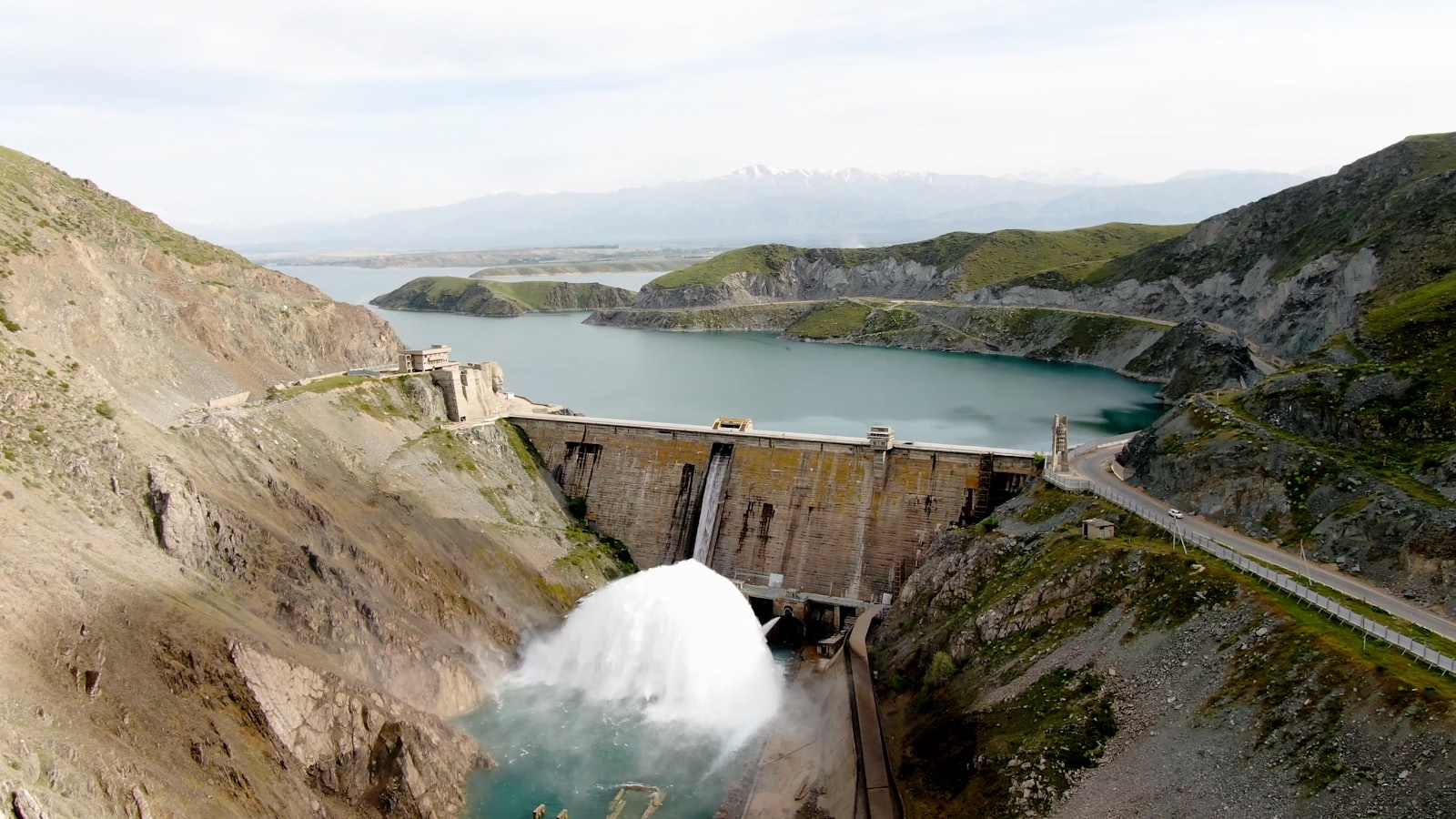
A hundred and fifty years ago, a river was a kind of fate. It flooded the towns it wanted to flood and starved the fields it wanted to starve, and the people living alongside it organized their entire existence around not provoking it. Then, slowly and without anyone declaring a revolution, we stopped treating rivers as weather and started treating them as plumbing. Dams, levees, reservoirs, canals. We did not conquer water so much as domesticate it, and somewhere in that process the river stopped being a god and became a utility. Nobody today calls a reservoir an act of hubris. We call it infrastructure.
What actually changed was never the water. It was the math. For most of history the cost of bending a river exceeded the cost of simply enduring it, so we endured. The moment that ratio flipped, our supposedly deep philosophical discomfort with controlling nature evaporated almost overnight, replaced by zoning permits and maintenance budgets. Societies become remarkably unsentimental the instant intervention gets cheaper than suffering.
I think weather is sitting roughly where rivers sat in the nineteenth century, and for the same unromantic reason. We still talk about it as something that happens to us, an externality, the one variable in the economy that everyone prices and no one owns. But weather already sets agricultural yields, insurance losses, energy demand, water supply, and in the harder cases, where people are able to live at all. An enormous share of global economic uncertainty traces back to a system we currently treat as untouchable. That is exactly the kind of situation that does not stay untouchable for long.
And we are further along than the sci-fi framing suggests. Cloud seeding has been operational for decades, governments quietly fund modification programs, and researchers are actively testing interventions from cloud brightening upward. We are not waiting on the technology to be invented. We are in the messier in-between period where the tools exist, the economics are starting to pencil out, and the institutions have not remotely caught up.
The piece people get wrong is assuming this is a story about control. It is really a story about predictability, which is a much older and more lucrative business. Insurance, logistics, cloud computing, the entire apparatus of modern finance: none of them sell certainty, all of them sell variance reduction, and weather is one of the largest pools of unpriced variance left on the planet. Nobody actually needs perfect weather. Farmers need fewer droughts, utilities need fewer surprises, insurers need fewer once-in-a-century losses arriving every third year. Shave the tails off the distribution and you have created something worth an extraordinary amount of money without controlling anything at all.
What moved this from idle thought to something I take seriously was watching AI. Understanding has always preceded intervention. The first computers did not run companies, they let us finally see them; the first maps did not direct the ships, they let the captains stop guessing. We are now modeling chaotic physical systems with a fluency that would have seemed absurd a decade ago, and visibility at that scale tends to be the thing that makes the previously unthinkable start to look like an engineering problem.
The river never announced the day it became infrastructure. There was no ceremony where fate turned into plumbing, just decades of small and individually boring decisions, a levee here and a reservoir there, until at some point the danger had been engineered down to a line item nobody thought about. The sky will probably go the same way, and just as quietly. Not a machine that commands the weather, but enough sensors and models and hedges layered on top of each other that one season we look up, notice we have stopped organizing our lives around the storm, and struggle to remember when exactly we started taking it for granted.